The development of technology has led to an evolution in the education sector. When Massive Open Online Courses (MOOCs) started the integrity of institutions offering such programs was questioned. This was because the delivery method together with assessment criteria involved were deemed unnecessary. Fast-forward to 2019/2020 a pandemic wave called COVID-19 bellowed across the globe and online learning became the new normal. With a flash, the visionaries, whose efforts were being questioned became heroes that saved the entire education system that almost came to a stand-still. That said, the world has already started shifting from university graduates for skill expertise with big companies like Google, Amazon and Facebook not even requiring a degree as a qualification criterion for a job but a portfolio of projects showing off your skills. This is a game changer in the recruitment space, so much craved for by the educated and the currently learning. This development raises a lot of important questions that cannot be covered in this write-up. One of these questions is “who authored the current education system and with what intention”? The current system seeks to produce employees who can remember what they have learned and the authors believe this is not the calibre of graduate companies are still looking for. There is a discord between the graduates produced and what the market is now looking for.

The two evolutions one in the education space (online learning) and another in the industry (degree requirement no longer necessary but skills evidence portfolio) propagates to a big question is the examination method still necessary? Even in companies that will require degrees on job application, they just use the current system as screening method as they have moved from just interviews but skills competence activities that undoubtedly now take up the most important phase of the recruitment process. Candidates are either given mini projects beforehand and are assessed on these on the day of interviews. Sometimes job candidates are invited to a recruitment boot camp where they are given a number of activities either as individuals or as groups and the recruiters will be assessing the candidates as they engage in the activities.
Skills Competence is now the key concept in recruitment. To that effect, is the normal examination method system still relevant? Exams mould candidates into remembering the concepts they have learnt at any level of their educational journey. They are mainly used as the exit assessment method and are also allocated the major proportion of the coursework in some cases it is only the exam that counts, especially in the lower levels of educational system. Exams also create unnecessary competition on the students for a bid of getting higher marks than the rest of the class so that they can be recognised, a competition which is not only unhealthy but also not a true reflection of the skills and knowledge comprehension of what was learnt. Exams invoke unnecessary pressure and stress on candidates.
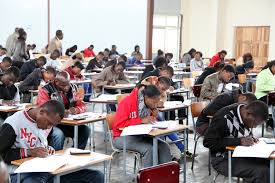
The 21st century technology evolution and the changes within the workspace have redefined the comprehension to knowledge and skills learnt. To the same effect the education system has to evolve to the current needs of its market otherwise it will end up producing graduates that are substandard to the job market. With various platforms offering free lectures on their online platforms and companies like Google, Facebook and Amazon no longer hiring on the basis of a degree it means that anyone in the globe can learn about a skill on the free platforms, implement it on a couple projects and build a portfolio which gets them to be employed at the big corporations in the world. The more this happens it will render the normal education system especially the higher and tertiary levels obsolete. Hence a need for them to relook at the exit assessment criteria to reflect the needs and requirement of the job market. After all the education system is meant to ensure that there is validation to the comprehension of the knowledge and skills learnt. The current assessment through examinations has created a culture where students only study to pass an exam and quickly forget on the application of the concepts learnt when they proceed to the successive level. This is buttressed by the following three research studies;
1) In 2015 Harriet Jones et al., whilst researching on Indications of Knowledge Retention in the Transition to Higher Education in the UK they took 600 students from 5 Universities in the UK that had done biology at A Level to write a multiple choice question test on the basic concepts they had learnt in A level. The mean test score for all students was on average 41%. Students also tended to answer questions less well the longer they had spent between taking their examination and beginning university, suggesting that the ability to retain knowledge over time is a key factor in this study.
2) Roediger and Karpicke in 2006 discovered that frequent testing and re-testing of content may lead to a significantly higher retention level than merely re-reading the material as they observed a knowledge retention drop by an average 50% in one week. The assessment was only done over a one-week period which means periods more than week would result in far less knowledge retention capacity.
3) Between September 2014 and March 2015 Ferreira et al. did a study to evaluate the assimilation and retention of knowledge after a theoretical test in the undergraduate health science class at Lurio University, Nampula, Mozambique. They did a pre-test before the lecture, a post-test 30 minutes after the lecture and a retention test 6 months later the questions remained the same for all the tests. The frequency of correct answers at each stage was 33%, 83% and 66% respectively.
The above research studies are only a selection of a pool of similar research studies. However, all of them lead to the same conclusion that summative assessment (continuous assessment) with continuous retest on the same aspects improves the comprehension and retention of both the knowledge and skills. Again, one will ask themselves the same question “Are exams still necessary in the modern-day education system or they are just another archaic assessment method?”
The online learning especially on the background of a pandemic like the COVID-19 has highlighted more on the assessment types that are suitable for that online assessment leaving the question of online examinations a critical one. Online teaching especially in the third world countries like Zimbabwe has been met with mixed feelings as only a few institutions and families can afford getting resources for the new normal. On top the integrity of programmes comes into questioning as strict identity confirmation has to be done to make sure the person seating for the exam is really whom they say they are. Some students have had their future plans halted as institutions cannot resume operations for examination due to the Covid-19 lockdown restrictions. Surely this hurdle called exams really pushes for us to rethink the way the exit assessment method will work in the future
This article was Co-Authored by Ezekiel Nyoni and Happymore Mbiza.


Leave a Reply