
One Plant, One Team, Part Two: How to Make It Stick on Monday Morning
In Run It, Fix It, Own It Together, we highlighted how the invisible line between operators and technicians costs a plant tonnes wasted, money and trust. Systems thinking erases that line by treating the plant and all supporting activities as one connected circuit. The harder question becomes : how do you actually do it?
Agreeing that “reliability is everyone’s job” takes five minutes in a meeting. Changing how a crusher crew starts a shift takes months of steady, visible effort. This follow-up is about that effort: where to start, the routines that make shared ownership real, the traps that kill it, and a simple plan to get moving.
Start Where the Pain Is
The fastest way to fail is to launch “One Plant, One Team” across the whole site on the same day. Posters go up, everyone nods, and within a month the old habits return. Start instead with one area and one asset that everybody already complains about.
Every plant has a bad actor: the slurry pump that wears out impellers quickly, the conveyor that trips every night shift, the screen that blinds when the feed turns wet. Pull its last six months of breakdowns from the maintenance system and the shift logs. Choose the asset where downtime is high, the failures repeat, and both operators and technicians feel the frustration. A pilot built around shared pain gives both teams a reason to sit at the same table.
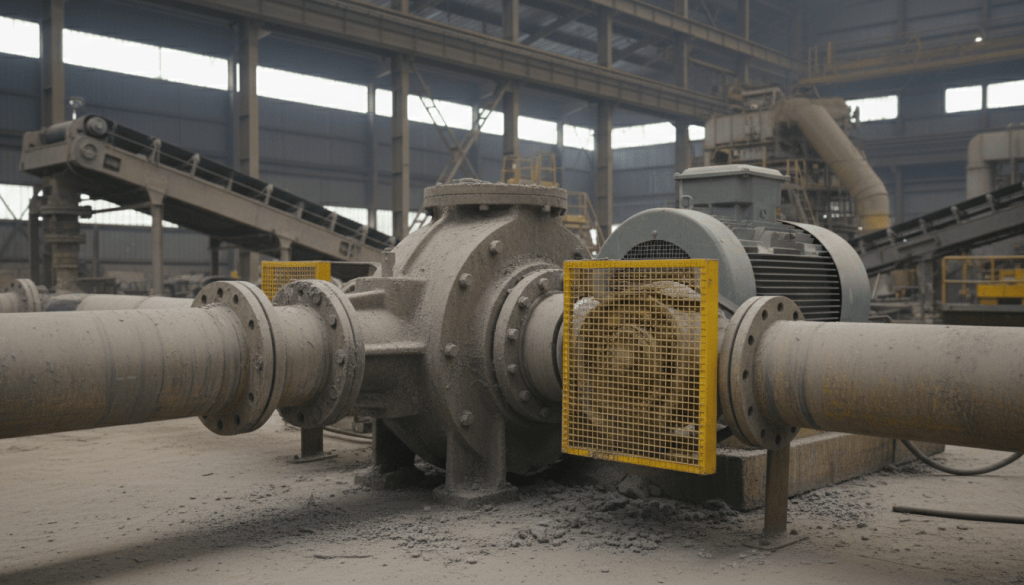
A visible win on one stubborn asset will do more to change minds than any presentation. People believe what they see working on their own plant.
Five Steps from Slogan to Shift
1. Teach the Circuit, Not Just the Machine
People cannot think in systems if they have only ever seen their own corner of the plant. Walk the circuit together. Let a technician explain to operators why a pump fails when it runs dry or cavitates. Let an operator spend part of a shift showing technicians what the control room sees when feed grade or density swings.
Keep it practical. A one-page sketch of the pilot circuit, showing how a fault upstream shows up downstream, is worth more than a week of classroom theory.
2. Clean, Inspect, Tag
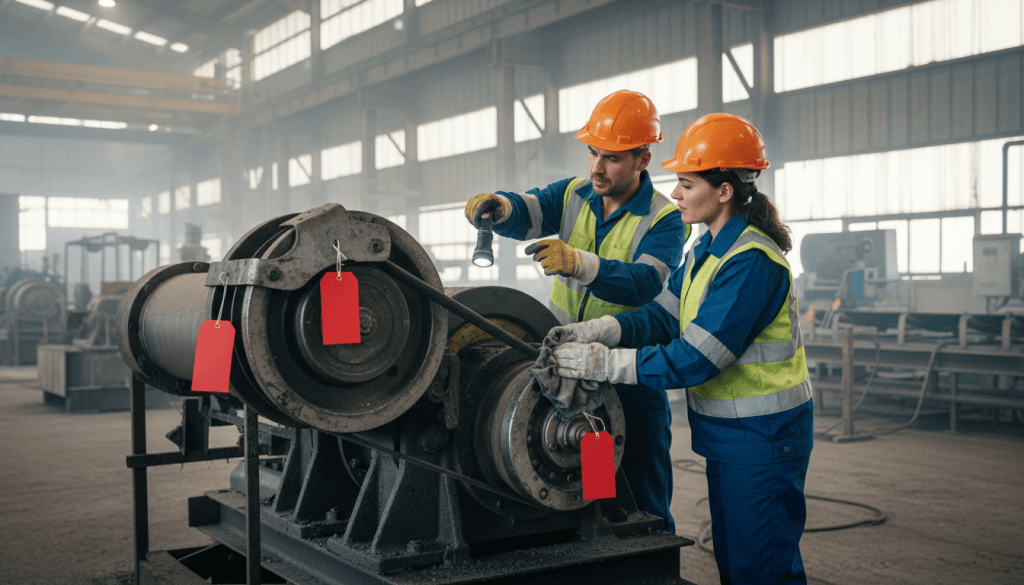
Operator basic care begins with 5S theory of TPM. Sort (Seiri): clear everything that does not belong around the pilot asset. Then Shine (Seiso), because in TPM “cleaning is inspection.” Operators and technicians clean it down together, exposing what dirt has hidden: loose bolts, leaking seals, cracked guards, missing grease points. Every defect gets a visible tag and a register entry.
Next, Set in Order (Seiton) and Standardise (Seiketsu): write photo-based standards showing what “good” looks like, what to touch and listen for, and when to raise the alarm. Teach through one-point lessons. Lastly Sustain (Shitsuke) depends on simplicity: basic care should take minutes per shift, not hours.
3. Make the Handover a Conversation

A shift log that nobody reads is not a handover. Hold a short joint handover, ideally at the equipment or the area board, where outgoing operators, incoming operators and the duty technician cover the same four points:
- What ran abnormally this shift, and when it started?
- Which defects were tagged, and which are still open.
- What maintenance is planned in the next shift?
- Any equipment running under restriction or temporary repair.
Ten to fifteen minutes is enough when it happens every shift, without fail.
4. Close the Loop on Every Failure
When the pilot asset fails, run a root cause analysis with both the person who ran it and the person who repaired it in the room. A simple “5 Whys” works for most events; repeat or costly failures deserve a deeper look. Give actions to owners on both sides, with dates.
Then close the loop with the people who raised the problem. An operator who reports a noisy bearing and never hears back will stop reporting. An operator who is told “your call saved us a gearbox” will report again tomorrow.
5. Measure What Both Teams Control

Shared ownership needs shared scorekeeping. Put a small set of measures on one board that both teams review together:
| Measure | What it tells you | Who moves it |
| Unplanned downtime (hours) | How often the plant stops without warning | Both teams |
| Overall Equipment Effectiveness (OEE) | Availability, performance and quality combined | Both teams |
| Defect tags raised vs closed | Whether problems are found early and actually fixed | Operators raise, technicians close |
| Repeat failures | Whether root causes are being removed | Both teams, through joint RCA |
| Planned maintenance completed on schedule | Whether maintenance windows are respected | Production releases, maintenance delivers |
Keep the list short. Five honest numbers that both teams trust beat twenty that nobody reads.
Five Traps That Kill Shared Ownership
Most of these programmes do not fail loudly. They fade. Watch for these warning signs:
- Dumping work on operators. Basic care without training, tools or time on the shift plan feels like extra work, not ownership. Operators will quietly skip it.
- Tags that never close. If defects are tagged but sit open for weeks, operators conclude that reporting is pointless. Trust dies faster here than anywhere else.
- Metrics used as weapons. The moment a shared board is used to blame one team in a meeting, it stops being shared. Review numbers to learn, not to punish.
- Supervisors who do not model it. If the production supervisor still overrides every maintenance window, no routine will survive.
- Going too big, too fast. A site-wide launch spreads attention thin. Prove it on one asset, then expand.
Operators and technicians watch what their supervisors do far more closely than what they say. When the production and maintenance supervisors attend each other’s morning meetings, the wall starts to come down from the top. When a production manager protects a planned shutdown even in a tough tonnage week, everyone learns that maintenance windows are real.
Leaders also decide what gets celebrated. Recognise the operator who caught a failing bearing early and the technician who fixed the root cause rather than the symptom. Recognition costs nothing, and it tells the whole plant what “good” looks like.
The first article made the case for one plant, one team. This one is about the unglamorous work of making it true: one asset, one clean-down, one honest handover, one closed loop at a time. None of these routines is new or complicated. What makes them powerful is doing them together, every shift, until they stop feeling like a programme and start feeling like how the plant runs.
Start small. Stay consistent. Celebrate the catches. Run it with care, fix it with understanding, and own it together, one shift at a time.


Leave a Reply